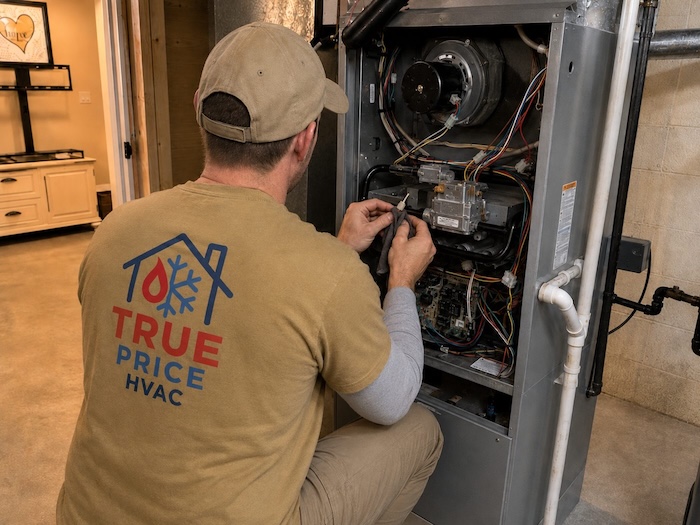
If your furnace is getting older, you have probably asked yourself the same question we hear all winter: how much longer will it keep going? It is a fair thing to wonder about, because the answer decides whether you spend a little on a repair now or plan for a bigger project. Here is how we think about it, in plain terms, for homes across Chicagoland.
How long a furnace really lasts
There is no single number that fits every furnace. The U.S. Department of Energy uses an average residential furnace lifetime of 21 years when it figures out what a furnace costs to own. That is a planning number, not a promise. Some furnaces run longer. Plenty give out sooner.
What moves a furnace toward the short end? Climate is a big one. The same DOE page puts Illinois in its colder “northern region,” where homes have more heating days and need more efficient equipment. Our furnaces work hard from late fall into spring, and every extra hour of run time is wear on the blower, the igniter, and the heat exchanger. Add a poor installation, dirty filters, or years without a tune-up, and the clock runs faster.
The good news is that you control a lot of this. A furnace that gets checked every year and is installed properly has a much better shot at reaching a ripe old age. That is why we always tell people that a $79 tune-up is the cheapest way to get more years out of the equipment you already own.
Signs your furnace is nearing the end
Furnaces rarely fail without warning. Most of them drop hints first, and the earlier you notice, the more choices you have. These are the signs we pay the most attention to:
- Age. If your furnace is close to 20 years old or past it, you are living on borrowed time.
- More frequent repairs. One repair is normal. A second and third in a short stretch usually means parts are wearing out together.
- Rising heating bills. If you use the same amount of heat but pay more, the furnace is working harder to deliver it.
- Uneven heat or new noises. Cold rooms, short bursts of heat, banging, or squealing all point to something that needs a look.
- Safety worries. Any sign of a carbon monoxide problem is not something to wait on.
That last one deserves a clear word. Carbon monoxide is colorless and odorless, and the U.S. Consumer Product Safety Commission says malfunctioning fuel-burning appliances such as furnaces are among the sources of CO deaths each year. It also recommends having your heating system professionally inspected every year. If a CO alarm goes off, do not go looking for the cause. Get outside and call 911 first.
Repair or replace? A practical way to decide
Here is where we want to be direct with you. We do not believe in pushing a new furnace on someone whose old one has plenty of life left. A repair that is reasonable and gets you through the season is often the smart call, and we will tell you so.
Our furnace repair starts with a $79 service visit, and that fee is waived if you go ahead with the repair. You find out what is wrong and what it costs before you commit to anything. You can see our full price list on the pricing page, so there are no surprises.
When you are deciding, ask yourself three questions. First, how old is the furnace compared with that 20-ish year mark? Second, how much is this repair compared with the cost of a new system, and is it the first repair or one of several? Third, is the problem a small part that is easy to swap, or a major component that signals the whole unit is tired?
If the furnace is fairly young and the fix is modest, repair it. If the furnace is old, the repair is expensive, and this is not the first time we have seen it, putting money into it can feel like pouring water into a bucket with a hole. In that case, replacing it is usually the better investment, and it saves you from a breakdown on the coldest night of the year.
Efficiency matters too. DOE’s own example for the northern region compares a basic 80% efficient furnace with a 95% ENERGY STAR model. Under the federal gas price DOE assumed, the older style costs about $597 a year to run against about $503 for the efficient one. Your actual numbers will differ, but the point holds: an old, inefficient furnace quietly costs you money all winter.
What replacement looks like
If replacement is the right move, we want the process to feel simple and honest. Furnace installation with us starts at $3,900, and the final price depends on the size of your home, the equipment you choose, and what the installation needs. We explain the choices in everyday language and let you decide. Good installation matters as much as the furnace itself, since DOE notes that oversizing and leaky ducts shorten equipment life.
Whichever way you go, keep the new system healthy. Regular maintenance is what keeps a furnace running well through the years, and it is the easiest habit to build. Our maintenance visits are $79 per unit.
Pricing note: the prices in this article were accurate as of October 2026. Prices can change, so please check our pricing page or call us for current rates before you book.
Not sure where your furnace stands? Give us a call at (224) 482-2059 or send us a message. We will take a look, tell you what we find, and help you pick the option that makes sense for your home and your budget. True Price, No Surprise.